
Preparing growing up milk for a toddler seems straightforward, but busy parents often struggle with conflicting advice on water temperatures, scoop sizes, and mixing techniques, which can compromise a child’s nutritional intake. To prepare growing milk correctly and safely, you must strictly follow the manufacturer’s specified water-to-powder ratio using the provided scoop, mix the powder with water boiled and cooled to the temperature indicated on the packaging, and gently blend the mixture to avoid air bubbles.
Why must you follow the exact water-to-powder ratio on the label?
Following the exact water-to-powder ratio on the label ensures your toddler receives the precise balance of hydration and nutrients required for their developmental stage. Deviating from these instructions by adding too much or too little powder can lead to digestive issues or nutritional imbalances.
When you make the milk too concentrated by adding extra powder or using less water than recommended, you put your toddler at risk of dehydration and digestive discomfort. A toddler’s developing kidneys require a specific balance of water to process the solutes in the milk; overly concentrated formula forces the kidneys to work harder, which can lead to dehydration, especially in warm climates. Additionally, concentrated milk can cause gastrointestinal issues such as constipation, hard stools, and painful gas.
Products mentioned in this guide
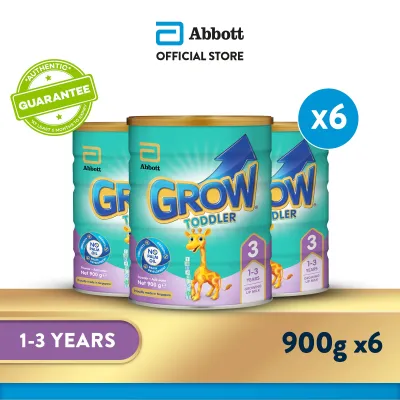
348 Lazada user ratings
Complete nutrition for toddlers, High-quality milk for growing up, No palm oil, easier digestion, 💰Price: good 😋Taste: good 📄Nutritional Val…Read full reviewShow less
Complete nutrition for toddlers, High-quality milk for growing up, No palm oil, easier digestion, 💰Price: good 😋Taste: good 📄Nutritional Value: good Fast delivery, good packing
Healthy choice for kids. Essential nutrients for growth. Promotes brain development. Great milk for toddlers!
Easy transition from stage 2, Trusted brand for toddler milk, Essential DHA for brain and eye development,
Received in great condition. Grow promotes brain development. Complete nutrition for toddlers.
Great milk for toddlers! Tastes great, kids love it. Expiry date is in year 2027.

690 Lazada user ratings
Received per order. Nice milk supplement for my kid. Will buy again if the are discount
Received per order. Well packaged for delivery. Will order again from red mart.
delivery is on time as planned. Items are in good order. Recommended
always pack 1 packet in my sons snackbox. and he always finishes it
Repeat orders. My children loves and drink a lot of this milk.

520 Lazada user ratings
Great taste for kids!, Contributes to learning and development!, Convenient and ready-to-drink!, Rich in essential nutrients!,
Redmart delivery was punctual. Bought for child to try as it was on promotion. My kid likes it. Will consider buying again!
Perfect for growing kids!, Provides energy for daily activities!,
Fast delivery highly recommended. Bought many times already…
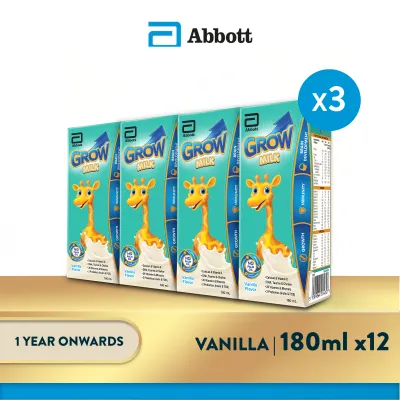
275 Lazada user ratings
Products well received packed in carton with good condition. Delivery took a days to arrived my residence. Thank you Seller!
My son like the taste of this milk. Got Free shipping and yet can received on next day. Milk Expiring: 06/08/2021
Worthy to buy as it is cheaper than supermarkets.. fast delivery also..

202 Lazada user ratings
Supports calcium absorption for strong bones, Great taste for kids, Rich in DHA for brain development, 😋Taste:my child loves it
Perfect for kids aged 3-12 years, Trusted brand for children's nutrition, Supports calcium absorption for strong bones,
Super prompt delivery. Bought on Abbott's day with special discounts. Expiry date is 28th October 2022.
Convenient and ready-to-drink, Boosts immune system with zinc and iodine, High-quality ingredients,
thanks seller thanks shiper. Good buy. Good product thanks so much.

480 Lazada user ratings
1st time buying this on lazada. a little more ex than supermarket but no need to carry so much back home. hopefully can have more discount i…Read full reviewShow less
1st time buying this on lazada. a little more ex than supermarket but no need to carry so much back home. hopefully can have more discount if buy more and make it cheaper than supermarket.
slightly lower price due to voucher. but is this consider short expiry stuff? seriously not sure.
Fast delivery within 3 days. Well packed in carton box. Expiry date within 6 months.
Received in good condition. Delivery in less than 5 days. Expiry date is July 2023.
need to rush abit to finish it. normally gave to kids when they have craving only.
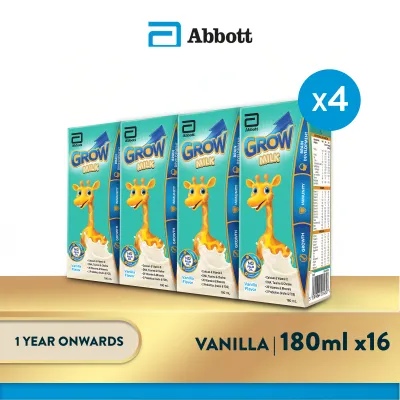
923 Lazada user ratings
Convenient and ready-to-drink, Suitable for children aged 3-12 years, first time buying to try. Total got 4 packs but 2 packs got some dents…Read full reviewShow less
Convenient and ready-to-drink, Suitable for children aged 3-12 years, first time buying to try. Total got 4 packs but 2 packs got some dents so not all received in good condition.
Formulated for toddlers and school-going kids, it’s all-rounded nutrition that supports brain development, immunity and growth. Granddaughte…Read full reviewShow less
Formulated for toddlers and school-going kids, it’s all-rounded nutrition that supports brain development, immunity and growth. Granddaughter loves this milk.
My toddler tried it for the first time and she loves it so much!! She keeps saying more! Boosts immune system, Easy to digest,
received. will order again when got promo. always order this milk for my girl bring to school for lunchbox.
Prices are valid at publication and may change. Please refer to the product page for the latest price.
Conversely, making the milk too diluted by adding too much water or fewer scoops than directed carries its own set of developmental risks. Diluted milk reduces the caloric density of the feed, meaning your toddler may not receive the energy and essential nutrients required for healthy growth and weight gain. Over time, this can lead to poor nutrient absorption and, in severe cases, water intoxication—a dangerous condition where excess water dilutes the sodium levels in a child’s bloodstream, leading to serious neurological complications.
To maintain the correct ratio, always use only the specific scoop provided inside the tin of milk powder you are currently preparing. Scoop sizes vary significantly between different brands and even between different stages of the same brand, so never swap scoops. When measuring, scoop the powder loosely and level it off using a clean, dry knife or the built-in leveler on the rim of the tin. Avoid packing the powder down into the scoop or heaping it, as this adds unintended extra volume and alters the nutritional balance.
What is the correct water temperature for mixing toddler milk powder?
The correct water temperature for mixing toddler milk powder depends entirely on the manufacturer’s instructions, as different formulations require specific temperatures to dissolve properly and protect heat-sensitive nutrients. You must always check the product label to verify whether the powder requires warm water or water cooled to room temperature.

Water temperature is a critical factor in both safety and nutritional quality. Growing up milk powders often contain heat-sensitive vitamins, minerals, and beneficial ingredients like probiotics or prebiotics designed to support your toddler’s gut health and immune system. Mixing the powder with water that is too hot can degrade these delicate nutrients, reducing the overall nutritional value of the feed. Conversely, using water that is too cold may prevent the powder from dissolving completely, resulting in a clumpy texture that can clog the teat and make feeding difficult.
Because different formulations have unique ingredient profiles, there is no single universal temperature for mixing toddler milk. Some brands require water that has been boiled and cooled to around 40°C, while others may specify room temperature or even slightly warmer. It is essential to read the manufacturer’s instructions on the tin carefully before preparation.
For parents in Singapore, tap water is safe and meets high quality standards, but boiling it first remains a highly recommended practice for preparing toddler milk to eliminate any potential localized contaminants from household plumbing. Boil fresh tap water and allow it to cool in a clean, covered container until it reaches the temperature specified on the product label. If you choose to use bottled water, ensure it is still boiled and cooled according to the same safety guidelines unless the manufacturer states otherwise.
Under no circumstances should you use a microwave to heat the water or warm a prepared bottle of milk. Microwaves do not heat liquids evenly; they create localized “hot spots” within the milk that can easily burn your toddler’s sensitive mouth and throat, even if the outside of the bottle feels cool to your touch. Additionally, the intense heat from microwave radiation can rapidly destroy the nutritional components of the milk.
What is the step-by-step process to prepare a safe bottle of growing milk?
Preparing a safe bottle of growing milk requires a clean environment, precise measurement of water before adding the powder, and a gentle mixing technique. Following a structured, hygienic sequence minimizes the risk of contamination and ensures the milk is mixed thoroughly.
Before you begin, wash your hands thoroughly with soap and warm water for at least twenty seconds, drying them with a clean, lint-free towel. Ensure the preparation surface is clean and free from food debris. All feeding equipment, including the bottle, teat, collar, and cap, must be thoroughly washed in hot, soapy water and sterilized using a steam sterilizer, chemical sterilizing solution, or by boiling them in water for at least five minutes. Allow the equipment to air dry completely on a clean rack before assembly.
The correct order of mixing is crucial: always pour the exact volume of cooled, boiled water into the bottle first, before adding any powder. Measuring the water first ensures that the volume is highly accurate. If you add the powder to the bottle first and then fill it with water up to the desired line, the powder will displace a portion of the water. This results in a finished volume that contains less water than required, making the milk overly concentrated and potentially harmful to your toddler’s digestion.
Once the water is in the bottle, use the scoop provided in the tin to add the exact number of leveled scoops specified by the manufacturer for that volume of water. Never add extra powder to make the milk “stronger” or attempt to estimate half-scoops for custom volumes. If your toddler requires a different amount of milk, always scale the preparation up or down using the exact ratios provided on the label (for example, preparing a full standard serving and discarding any excess if they do not drink it all).
After adding the powder, secure the teat, collar, and cap onto the bottle. To mix the powder, avoid shaking the bottle vigorously up and down. Vigorous shaking introduces a large amount of air into the liquid, creating a thick layer of foam and tiny air bubbles. When your toddler drinks this foamy milk, they swallow the trapped air, which can lead to painful gas, bloating, and fussiness after feeding. Instead, gently swirl the bottle in a circular motion or roll it horizontally between your open palms. This gentle motion allows the powder to dissolve smoothly into the water without creating excess air bubbles.
How do you check the milk temperature and consistency before feeding?
Before offering the bottle to your toddler, you must verify that the milk is at a safe temperature and completely dissolved without any remaining clumps. A quick physical check prevents burns and ensures the milk is easy for your child to drink.
To test the temperature, shake a few drops of the prepared milk onto the inside of your wrist. This area of skin is highly sensitive and provides an accurate gauge of how the liquid will feel in your toddler’s mouth. The milk should feel comfortably warm or at room temperature, never hot. If the drops feel hot on your skin, do not feed it to your toddler; instead, cool the bottle by holding it under cold running tap water or placing it in a bowl of cold water for a few minutes, then retest the temperature on your wrist before feeding.
Next, perform a visual consistency check by holding the bottle up to a light source. Gently tilt the bottle and look closely at the bottom and sides for any undissolved clumps of powder, sediment, or separation of the liquid. Undissolved clumps mean your toddler is not getting the full nutritional value of the feed, and these clumps can easily clog the teat, causing frustration during feeding. If you notice any clumps, continue rolling the bottle gently between your palms until the mixture is completely uniform and smooth.
Once your toddler begins drinking from the bottle, bacteria from their saliva enter the milk and can multiply rapidly at room temperature. For optimal safety, the feed should be completed within a standard timeframe, typically within one to two hours of preparation, depending on the specific manufacturer’s guidelines. If your toddler does not finish the bottle within this window, discard the remaining milk immediately. Never save leftover milk in the refrigerator or reheat it for a later feed, as this poses a significant risk of bacterial contamination and foodborne illness.
If you need to prepare a bottle of growing milk in advance, do so only if you can store it immediately in the main body of the refrigerator (not the door, where temperatures fluctuate) at 4°C or below. Prepared, untouched formula stored this way must be used within the timeframe specified by the manufacturer, which is typically 24 hours. When you are ready to feed your toddler, warm the bottle by placing it in a container of warm water or using a bottle warmer, and always perform the wrist temperature test before serving. If your toddler experiences persistent digestive discomfort, changes in bowel habits, or other feeding difficulties, stop use and consult a qualified healthcare professional or pediatrician for personalized guidance.

Community discussion
Share your experience or ask a question. Comments are reviewed before publication.